We often think about grief as learning to live with someone's absence, but remembrance allows us to acknowledge that our relationships don't simply disappear when someone dies. The love, the stories, the lessons, the traditions, and the memories continue to be part of who we are.
The Holidays After Loss: Choosing What Feels Right For You
The holidays can be brutal for someone after a loss. This time is often thought of as a time of “togetherness” and yet the person you want to be “together with” is no longer there.
To heal from your pain, you need a healthy balance of solitude and interaction. This is especially important when you feel that heaviness as the holidays are approaching. You can feel it in your body, that you’re just not ready for all the feels this season will bring.
You might be feeling overwhelmed by all that is coming and you feel like running into the woods until 2027. But what is right for you? How do you decide if you can handle social settings or need some quiet time alone? And how much is too much one one thing?
David Kessler reminds us, “You’re not a grinch, you’re in grief”. It’s ok to not feel happy, and it’s ok to recognize when you need to be alone.
What’s the difference between solitude and isolation?
Solitude is when you need some time just to be alone with your memories and your thoughts. You’re choosing intentional time to connect with yourself.
Isolation is when you begin to shut people out of your life, staying at home and not choosing opportunities to Isolations separates you from receiving what we were wired for…connection.
Deliberate solitude gives you restorative time to rest and process feelings. Unintentional isolation cuts you off and can lead to heavy stress or negative thought spirals.
Why Solitude Feels Necessary
Rest for the nervous system: Being around others requires energy, conversation, and emotional management that you may not have right now.
Space to feel: Solitude gives you a quiet place to cry, reflect, process memories, and sit with your emotions without feeling rushed or judged.
Relief from expectations: You get a break from answering questions, pretending to be "strong," or managing other people's discomfort.
Biological response: The push-pull between wanting connection and wanting isolation is a natural way your body regulates high cognitive load and stress.
It is, however important to recognize when your solitude turns into an unhealthy coping mechanism. Harmful isolation happens when pulling away turns into a long-term pattern where you stop answering people you care about, spiral into heavy negative thoughts, or feel completely stuck.
To experience the benefits of solitude and interaction, it’s important to evaluate situations before you’re in them. Ask yourself these questions:
If I choose to be with people today, will I:
Be willing to talk about my loved one and share memories about him/her if opportunities arise?
Safely express my grief if I am ambushed by difficult emotions?
Be honest and ask for any needed help?
If I choose to be alone, will I:
Take time to dwell on my latest feelings and thoughts?
Talk to God or others about those feelings, seek help and accept it?
Avoid the temptation to numb my pain?
If you would answer “no” to any of those questions, rethink going into the situation, or take steps to make the experience more beneficial. For instance, if you realize you might not be able to talk about your loved one at an event, write a letter to give to those attending beforehand.
If you realize that when alone, all you think about is your sadness and despair, plan to occupy your time with an activity such as a creative activity, something active, reading, or a prayer or devotional.
The key takeaway is to think before committing to time alone or time with others and setting boundaries. Do what feels right for you, but recognize when you might be slipping into unhealthy habits that are detrimental to your overall wellbeing.
Reflect:
When you choose to be alone, what do you tend to do?
After you spend time with others, what was something positive about the experience?
Give yourself permission to spend the holidays in the way you need most. Take some time before the holiday season arrives to reflect on where you are in your grief and what you might need this year to honor your tenderness.
Adapted from GriefShare Survival Guide for Navigating the Holidays After Loss.
To watch Surviving The Holidays from Grief Share and learn more about joining a group, watch this video.
Finding Balance & Nourishment Through the Holiday Season
The holiday season can be hard to navigate with the busy schedules, stress, and feelings of grief that may come up or intensify during this time of year. Although it may not come naturally to prioritize yourself, it is so important to continue to fuel your body especially during times of increased physical and emotional stress,
As a nutritionist when I use the word nourish, I mean to consistently fuel your body with a balance of all the nutrients that support everyday function. You’ll see the phrase “nourish your body” throughout this article, I want you to think of it as giving your body what it needs to function, recover, and support you through whatever season of life you're navigating.
Understanding the Connection Between Stress, Grief, and Your Body
Remember, part of our nervous system and immune system reside in our gut and our gut communicates directly with our brain. During periods of increased stress, including emotional stress from grief, our digestion, appetite, sleep, and immune function can all be affected. The holidays bring on higher stress, more access to inflammatory foods and less access to vitamin d (sun), combine that with being on a grief journey, it can all feel overwhelming.
It is important to still put yourself and your needs as priority whenever you get the chance. What can we do to support our body and mind during this season?
Focus on What's Within Your Control
One of my favorite things to say to clients is to: focus on what’s in your control. There may be a lot of things out of your control but there are still times where you can take back control. A good place to start us looking at how you are fueling yourself in between gatherings? Are you getting in balanced meals, water and body movement?
These don’t need to be big changes or long exercises, it can be a short walk after you eat or prioritizing a meal before your busy schedule.
If its been difficult getting to the store to buy what you need, consider more ways to make food more accessible. Utilizing a service like “Thrive” may be beneficial a grocery delivery services, recurring grocery orders, or keeping a few easy-to-prepare meals on hand can help take some of the pressure off. This will help make sure you have food to nourish your body.
Remember, nourishing yourself doesn't have to be complicated to be beneficial.
Building a Balanced Plate
Building a balanced plate at home can be so easy!
½ your plate: Vegetables and/or fruits to provide fiber, vitamins, minerals, and antioxidants.
¼ your plate: Protein to support muscle maintenance, tissue repair, and immune function.
¼ your plate: Whole grains or starchy vegetables to provide carbohydrates for energy.
When I work with clients one-on-one, we can get much more specific with their individual needs, but this is a great starting point.
Remember, not every meal needs to look exactly like this. The goal is to build consistency over time, not perfection at every meal.
Small Additions That Support Your Body
Rather than focusing on everything you should avoid during the holidays, I encourage you to think about what you can add in to support your digestion, energy, and overall well-being.
Here are a few of my favorites:
Bone Broth
Bone broth can be a comforting way to add fluids and some nutrients to your day. Sip on it warm, use it as a base for soups, or substitute it for water when cooking grains. Its protein content varies by product, so it isn't always a replacement for a complete protein source.
Water
Hydration supports digestion, circulation, and normal body functions. With busy schedules, it's easy to forget to drink water throughout the day. Keep a water bottle nearby or enjoy warm herbal teas when the weather is cooler. For most people, regular meals and fluids provide the electrolytes needed for hydration.
Peppermint Tea
Peppermint tea is one of my favorite additions after a meal. It may help some people feel more comfortable when experiencing mild digestive discomfort or bloating. If you experience acid reflux, however, peppermint may worsen symptoms.
Garlic and Onions
Garlic and onions contain beneficial plant compounds and prebiotic fibers that can help support a healthy gut microbiome. They're also an easy way to add flavor and nutrients to meals. If you have a sensitive digestive system, particularly with IBS, you may need to adjust your portions.
More Vegetables
Adding vegetables to your meals provides fiber, vitamins, minerals, and antioxidants that support digestion and overall health. Roasted vegetables, soups, and seasonal produce are all easy ways to incorporate more variety.
Body Movement
Our digestive system relies on coordinated muscle contractions to move food through the gastrointestinal tract. Gentle physical activity can help support regular bowel movements and overall digestive health.
Something as simple as taking a short walk after eating can be beneficial. Movement can also provide an opportunity to step away from a busy environment and reconnect with yourself.
We’ve discussed focusing on what’s in our control, things we can add in to support our body, now the main question I always get…
How do I get through the holiday parties?
Ask if you can bring a dish! (These may or may not be applicable) but a lot of parties are pot luck style. I always like to bring a dish rich in protein and veggies. That way you know you can get a balanced plate in.
If you’d like a piece of dessert, have a serving size without guilt and take the time to savor and enjoy it. I still try to stick to the recommended 25 grams of added sugar for women, 30 grams of added sugar for men per day. It isn’t about turning down or saying no to desserts and treats, just being aware or how much you’re eating and staying within balance.
Water > Holiday beverage. Don’t forget holiday beverage may often have sugar in them as well, my advice is to alway have more water than holiday beverage (if it has sugar or alcohol). It can be as easy as having a glass of water in between beverages if you are having more than one.
Try not to stress too much. When you consistently nourish your body it has a strong defense to stress and toxins.
As we move through the holiday season, I want to leave you with this reminder: nourishing yourself isn't only about what you eat at holiday gatherings.
It's also about the meals you make at home, the water you drink throughout the day, the moments you spend moving your body, and the ways you continue caring for yourself when life feels heavy.
Grief doesn't follow a schedule, and neither does the process of learning how to care for yourself through it.
Some days, nourishment may look like a home-cooked meal filled with colorful vegetables. Other days, it may look like a simple bowl of soup, a piece of toast, or asking someone to help with groceries.
Focus on what you can add, what you can control, and what feels manageable for you right now.
The goal isn't to navigate the holidays perfectly. It's to find ways to support your body while still making room for the experiences, traditions, and emotions that come with this season.
By Stacey Ring, Clinical Nutritionist
We are thrilled that Stacey will be facilitating a workshop on December 15th covering more on this topic! Sign-up here! See more info below.
Stacey Ring is a clinical nutritionist and founder of Real Nutrition Kitchen. With a master’s degree in Nutrition and Human Performance, she takes a whole-body approach to health, exploring the connections between nutrition, gut health, stress, and overall well-being. Through her private practice and community workshops, Stacey is passionate about making nutrition education approachable, empowering individuals to better understand their bodies and find realistic ways to nourish themselves through every season of life.
You can find Stacey on instagram & facebook - @therealnutritionkitchen
website - staceyjfit.com

I Learned Grief Before I Learned the Words For It
Every now and then, I allow myself to think of how life would be if you had not died that day.
If you had not decided to fly over the ranch that day in the Piper Cub on June 2, 1976.
If you had just stayed home with your wife and child, maybe you would still be here.
What if you would have driven over to ranch headquarters; a mere 200 yards from the house to chat with your dad instead?
What if you had just made other plans with friends, like working on your Model-T Ford?
What if the wind conditions that day were different and your plane hadn’t been forced down, crushing your windpipe and body?
What if the small hospital in the closest town had been able to treat your injuries in time?
What if they hadn’t needed to transfer you to another nearby hospital where they thought they could save you?
What if the ambulance hadn’t broken down on the way to that other hospital?
What if you hadn’t died that day?
How would my life be different today, 49 years later?
Would I felt more loved?
I can look back now and know with certainty, that I have felt God’s fingerprints on my story…not to replace you or bring you back, but to carry your legacy throughout mine.
I have learned that there is a time to be broken, and a time to be glued and stitched back together, piece by piece.
I have experienced the void of life without you and the fullness of your memory through stories of those who knew you and loved you.
I have had the blessing of both your life and your memory.
Even if I allow myself to wander here, to this “what if” place every now and then, I can’t stay for long.
But while I’m here, I just want to say, “Even though I miss the though of what could have been, I know that a piece of you has been with me all along.”
There is no way to make tragedy beautiful. I can wish my story had been different, and still be grateful for the life that unfolded. Grief has taught me to carry both what breaks me and what builds me in the same breath. I hope you can someday find a way to experience the same.
All my love,
Jill
Pictured above: Little Jill at the Stone Land Company Ranch, watching Daddy John take off in the plane that took his life.
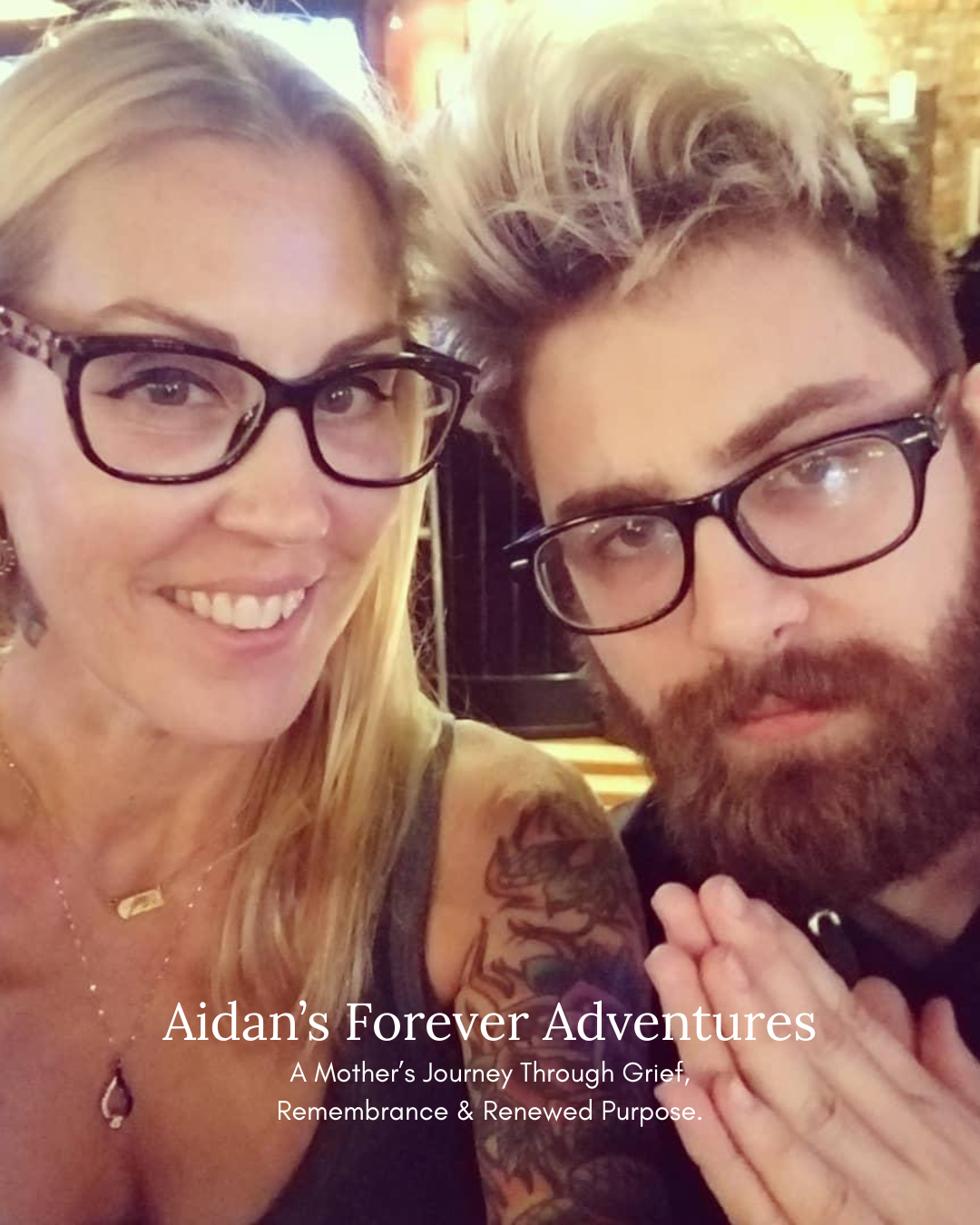
Aidan's Forever Adventures
Losing a child spins your world off its axis. You’re lost and you don’t have a clue how to survive. People you love don’t know how to help you and many stop coming around. You fear that your child will be forgotten. You just want the world to stop and mourn like you do. But life still keeps moving forward no matter how hard you fight it.
Every Day Is Practice
Giving Yourself Permission To Live After Loss
Guilt is a normal component of grief and can really tied to unresolved shame from a different part of our lives. (Another subject matter to explore at another time.) Guilt can make living life without your person can feel like a betrayal. But the truth is this: your capacity for joy does not diminish your love.
10 Years of Growing Flowers
“Everything grows here…flowers, weeds, relationships, music and laughter, compassion and joy. We get on our knees to weed and tend. We relish in the double rows of petals and heart-shaped centers. We cherish the combinations of colors that are built with each bouquet and are awed by how every single one of them is their own masterpiece. We proudly deliver them, knowing they won’t take away the sting of grief, but they might make a small difference in someone’s day.”
6 Common Myths About Life Insurance
When someone dies, families are often navigating both emotional grief and unexpected financial responsibilities at the same time. Planning ahead can help ease the burden of:
• Funeral and memorial expenses
• Burial or cremation costs
• Medical bills or legal paperwork
• Loss of household income
• Travel and family accommodations
• Time away from work while grieving
I’ve heard from so many families after a sudden or unexpected loss that they just didn’t think about life insurance or thought it was too expensive to include in their monthly budget. As someone who lost their father unexpectedly, not planning ahead of time can cause the family extra stress in a time that is already overwhelming.
Exploring and planning for the “what ifs” is an emotional rollercoaster. While its not something anyone wants to discuss, doing so can save your family from having to make those decisions during a time of deep grief.
Here are some common misconceptions about life insurance you’ve probably thought of when navigating planning for your future.
“I’m too young to need it.”
Life insurance is often more affordable when purchased earlier in life. If you buy yourself your favorite coffee drinks every week, you can afford this insurance.
“My family can just fundraise if something happens.”
While communities often want to help, financial protection offers stability without added pressure during grief. How often are we seeing GoFundMe fundraisers? It doesn’t have to be this way.
“Funerals don’t cost that much.”
Funeral, burial, cremation, travel, flowers, memorial gatherings, and time away from work can add up quickly. (Think in the 10k and upwards range as a baseline.)
“I have savings, so I don’t need insurance.”
Savings can disappear quickly when covering end-of-life expenses and daily living costs. Accounts after a death are frozen and require a process in order to gain access to them.
“It’s too complicated to understand.”
Learning the basics can help families make informed, manageable decisions for the future. Investing in this is the ultimate gift for your family. Although this is not a fun converstion, its one that is easier to have when the family is not it “crisis mode.”
“My retirement account can be used for the final expenses and life adjustments.”
There are a lot of risks and unknowns with using your retirement account such as lack of liquidity and taxes that are left to your loved ones with retirement accounts.
Life insurance is tax free, has immediate liquidity and has zero risk.
Give yourself peace of mind, and your loved ones the financial security they deserve by organizing your assets, accounts, & important contacts all in one place with a Lifefolio. Start by scheduling a consultation with a Life Insurance Agent you trust. They are not all out for your best interests, so get referrals, ask friends and family for their personal experience with their agent.
Don’t be afraid to ask questions before signing anything!
How does an inherited 401k impact your taxable income?
If a beneficiary is a Trust, does the trust have a bank account set up?
What if there are bills that need to be paid while planning a celebration of life for a loved one, what's the best asset to draw from first?
What's liquid?
What has income tax & penalties?
When did I last update my beneficiaries?
The financial decisions we make today affect us tomorrow & into the next generation, so if providing a legacy to kids, grandkids, or even a charity, religious organization, or an alma mater is important, you should understand the impact of leaving behind a life insurance policy, retirement accounts, stocks, and real estate.
The "In-Between" Space
For many, the idea of experiencing joy while grieving can feel foreign, even disloyal. How can laughter coexist with loss? How can light exist alongside something that feels so heavy? In the 6 years that I’ve been doing this work, I’ve heard this over and over. It just feels strange to be happy when you feel like you should be sad for the rest of your life.
The truth is: joy and pain can and do coexist.
What is Grief Brain & Why You Keep Forgetting Everything
Grief Brain Explained
Have you been struggling with basic everyday tasks since your loss? Do you feel like to you can’t concentrate, read the same sentence over and over again, and forget why you went into a room? Are you thinking to yourself, “What is wrong with me?”
Chances are, you have grief brain. This is a very real cognitive and neurological effect many people experience after loss. You might have heard people being in the “fog of grief”, because that’s exactly what grief brain looks and feels like.
~difficulty concentrating and making decisions.
~feeling “out of it”.
~can’t complete basic tasks.
~becoming easily overwhelmed by thoughts of grief, sadness, loneliness.
~forgetting appointments.
~feeling exhausted all the time.
~increased irritability
~feeling anxious all the time.
~headaches, body aches, and muscle tension.
~lack of energy
~inability to feel pleasure (Anhedonia)
Grief effects every part of our body including our nervous system. When someone you love dies, your brain shifts into survival mode and your system puts all its energy into stabilization. This means everything else has to fight for the remaining energy.
So, you have grief brain, now what?
It is important to be patient with yourself and to remember that grief brain is a condition that is not permanent. Everyone experiences loss, but each of us mourn differently. Try to not compare yourself to others and how they grieve. There are little things you can do every day to cope with grief brain. Here are a few ways to try:
1. Writing/Journaling
Writing down thoughts, memories, dreams in a notebook often helps process emotions and helps you become more aware of where you might be “stuck”.
2. Seek Support
Finding people who support your journey in a nonjudgemental way help you feel less isolated. Consider connecting with a support group either virtual or in-person. There is no “one size fits all” group and you might have to try a few out before you find one that works for you.
3. Engage in Self-Care
Include self-care activities in your life. This can look as simple as walks, good food, plenty of rest, and friend time. Self-care doesn’t have to be expensive, but it is necessary. Make a list of self-care activities for yourself and try to pick one every day.
4. Prayer/Meditation
Take time for silent time with yourself, without distractions. This practice is powerful for the mind and body that works with the nervous system. While you’re praying and meditating, you’re unconsciously regulating blood pressure, increasing oxygen levels, reducing stress and relaxing muscles.
5. Give Yourself Grace
Get comfortable with feeling whatever you’re feeling. Tell yourself it’s ok to not be ok. Allow yourself the time and space you need to process all of the messy emotions that come after loss. If you stuff these down into the abyss, they will lie and wait for an opportunity to hit you again. This is how grief works. When you practice kindness with yourself, you’re nurturing yourself the way a good friend would.
6. Reduce Outside Stressors in Your Life
Sometimes, we don’t realize we are swimming in unhealthy habits. This could be alcohol or drug use, food or sex addiction, gambling or a number of other short-term fixes to “numb” your grief.
Remember these key points:
-Pushing yourself harder often makes the fog thicker.
-Support your nervous system while you heal. Give yourself lots of space to be with all your emotions. Don’t put unrealistic expectations on yourself.
-Your brain is working overtime to “rewrite” your internal map of your new world. Acknowledgement goes a long way.
-Let yourself be ok with resting, having slow days, not doing much of anything. Inside is doing a lot of mending and that takes energy.
Grief will never end, because we don’t ever get our person back in this lifetime. With time, connection, growth and healthy coping skills, the sting of death can lessen. Finding a path that works for you is possible. Do not give up hope. You’re never alone in your grief.
Sending love your way,
Jill
Creating Space to Grieve ~ Using Creative Arts After Loss
Grief is multidimensional, it requires more than conversation alone. Finding a therapist or grief support group is an option and often helpful if the fit is right, but it’s not the only path to healing. Building a full toolbox full of coping skills, connection, education and community with other grievers. Creative arts—writing, painting, and hands-on crafts—offer structured, evidence-informed pathways to process loss in ways that feel accessible and embodied. Creative engagement gives grief form.
When The New Year Begins and Grief Comes with Us
The beginning of each new year often arrives with an unspoken expectation: fresh starts, clean slates, renewed energy. To a griever, this idea seems like a dagger to the heart; a reminder that your world will never be the same. The start of a new year without your person seems cruel and wrong. The loss does not disappear at 12:01 January, 1st.
36 Journal Prompts For Life After Loss
Our dear friend Jan Haag, who blesses us every month with her “Writing As A Healing Art” workshops used these journaling prompts at our latest Wellness Retreat. (curated by Emily Stoddard). I wanted to share them with the rest of our community, because they’re simple prompts that can help even the most novice writer get started. Many of us unfairly believe we are not writers, but as Jan always says,”If you write words on a paper, you’re a writer!”
Supporting Your Nervous System This Season ~ Simple Ways to Bring Calm & Balance To Your Body
As we head into the holiday season, it important to notice our body’s physical and mental stress, fatigue and overwhelm. Often as we approach big holidays, our body lets us know what’s coming…but we can also find opportunities to nurture ourselves with the slowing/changing patterns around us…in our weather and light.
At its core, the nervous system is your body’s communication network. It constantly sends and receives signals to keep everything in your body from running smoothly. The central nervous system (the brain and spinal cord) acts as the control center, processing information and making decisions.
The nervous system is designed to enable you to shift smoothly between states of alertness and relaxation. But modern life often overwhelms this system. Chronic stress, grief, past trauma, and even ongoing health challenges can trap the body in survival mode. Instead of moving fluidly between “fight or flight” and “rest and digest,” the system can get stuck, leaving you wired, exhausted, or both. Being stuck in a sympathetic state can have real physiological effects (physical symptoms), such as high blood pressure, metabolic issues, or stress and dysfunction of other organs like kidneys.
When this happens, symptoms show up not only in your mind but across the whole body: sleep issues like insomnia, gut problems like IBS, brain fog, anxiety, and a heightened sensitivity to stress. Over time, constant activation wears down the body’s resilience, making recovery harder and overall health decline.
When the nervous system gets stuck in patterns of stress, it can feel like you’re in an endless cycle of overwhelm. You can train your brain to break this cycle.
Try these methods on your own. I’ve added some explanations for some of those that you might be unfamiliar with.
~drink something warm
~watch a funny movie
~get adequate sleep
~stop the scroll
~try a new craft
~keep a gratitude journal (Try noticing 3 things every day)
~prioritize nourishing foods (It’s soup season!)
~cuddle with a pet…or someone else’s
~go for a walk
~watch the sunset/sunrise
~gardening
~read a good book
~have coffee/tea with friends
~get morning sunlight (30 mins, especially in the morning)
~daily meditation/prayer (try this from my friend Jill Weston)
~plan a fall outing (think apple picking or leaf collecting)
~experiment with a grounding practice (take your shoes off and stand in the grass)
~turn off the news
~use amber lights at night
~hug someone
~chew gum
~yoga/stretching
~get a massage (Check out our resources page)
~sing/listen to music you love
~dance to your favorite songs
~lay down and put your feet up against a wall
~breathwork
A simple pattern to try is inhale for 4 counts, exhale for 6 counts. Here’s how:
Find a comfortable position and relax your body.
Inhale through your nose for 4 counts.
Exhale slowly through your mouth for 6 counts.
Repeat this cycle for 2–3 minutes.~vagus nerve exercises
Vagus nerve exercises helps shift you into the parasympathetic “rest and digest” state, and when practiced regularly, it can lower your baseline tension, making it easier to feel calm and recover from stress.
~humming
The vibration created when you hum helps stimulate the vagus nerve and promote relaxation. You can do this anywhere—quietly on a walk, while traveling, or at home.
~grounding:
Grounding is a quick and effective way to calm your nervous system by reconnecting with your body and the support beneath you. This simple practice can be as short or long as you’d like, whether you’re standing with your feet rooted into the floor, sitting back in a chair, or lying down on a yoga mat or bed.
The exercise begins with a few deep breaths and a sigh, then guides you to focus on the part of your body that is in contact with the surface beneath you. It might be your feet, your back, or your whole body if you’re lying down.
~tapping technique (lymphatic stimulation):
Lightly tap along the back and inside of each arm, move up toward the neck, then tap the center of the chest and under the arms near the rib cage. You might even notice a yawn, which is a natural sign that your nervous system is shifting toward relaxation!
~progressive muscle relaxation:
Tense a muscle group (for example, your shoulders or thighs) for 2–3 seconds.
Exhale with a sigh and release all tension from your muscles.
Move through areas of the body (shoulders, arms, stomach, legs), first creating tension and before releasing.
Each time, take a moment to notice the feeling of deeper relaxation, like stepping down a staircase.
In addition to these at-home practices, I highly recommend working with Karen Penfold of Full of Hope Yoga if you’re in the Sacramento area to help you in your nervous system regulation journey. She has worked with Together We Heal Community for many years and specializes in regulation the nervous system. She has a course on this exact topic HERE.
Sources:
A Reading List for the Brokenhearted: 92 Books on Grief
These 92 books were compiled by Daniel Hernandez M.A., Clinical Thanatologist. Daniel leads our Grief Support Groups and teaches seminars on different topics of death, dying and bereavement for Together We Heal Community. He joined us last year and has been a turning point for our organization. He brings his skills, passion and whole heart to our community!
Decluttering a Loved One’s Belongings After Their Passing
Losing a loved one is an emotional journey filled with grief, and one of the most challenging aspects is the process of letting go of their belongings. Each item holds memories and emotions, making the task a poignant and often bittersweet experience.
Regina Arnold states, “When you’re surrounded by your loved one's belongings, it can be easy to focus on the pain of their loss. However, if you choose to keep only the items that bring you joy, you can remember your loved one in positive and pleasant ways.
In this blog, we explore the steps involved in navigating this delicate process. We will be hosting “Decluttering Through Grief” with Arcelia Cervantes on March 16th to further dive into this subject and give you more help letting go of items.
Here are some tips to explore until then.
Give Yourself Time:
Grieving is a personal journey, and there is no universal timeline for healing. Allow yourself the time needed to process the loss before diving into the task of sorting through belongings. Rushing this process may intensify emotions and make it harder to let go.
Start Small:
Begin with less emotionally charged items. Sorting through less sentimental belongings first can help you ease into the process and gradually build the emotional strength needed for more challenging decisions.
Create a Support System:
Enlist the help of friends or family members who can provide emotional support and assistance. Having someone to share memories with and offer guidance can make the process less isolating.
Preserve Memories:
Find a way to keep the memories with a smaller footprint on your space. Consider creating a memory box or scrapbook with some of your loved one's belongings. Select items that hold special significance and can be cherished as keepsakes. This allows you to preserve memories while making space for the future.
Donate and Repurpose:
Find purpose in letting go by donating items to charitable organizations or repurposing them. Knowing that your loved one's belongings are contributing to a positive cause can bring a sense of fulfillment and honor their memory.
Seek Professional Help:
If the process becomes overwhelming, consider seeking guidance from a grief counselor or therapist. They can provide coping strategies and emotional support to help you navigate the complexities of letting go. We are excited to partner with Arcelia Cervantes in March to discuss strategies in decluttering.
Create New Rituals:
Establishing new rituals or traditions can help you transition into a life without your loved one. Whether it's creating a memorial space or starting a new family tradition, finding ways to honor their memory in a positive light can aid the healing process.
Know When to Let Go:
Understand that some items may hold too much emotional weight, and it's okay not to part with everything. Focus on what feels right for you, acknowledging that letting go is a gradual process, and it's okay to keep certain items close.
Celebrate Their Life:
Instead of solely mourning the loss, celebrate the life your loved one lived. Reflect on the positive impact they had on your life and the lives of others. Keeping their spirit alive in your heart and through their legacy can bring comfort during this challenging time.
Letting go of a loved one's belongings is a unique and deeply personal journey. By approaching the process with compassion for yourself and your emotions, you can navigate this bittersweet experience and find a path toward healing.
Why Grief Support Groups Are a Lifeline For the Bereaved
The one common denominator that connect all humans around the world is the loss of someone we love. Death is a natural part of life. The loss of a loved one is probably the hardest experience one can go through. Grievers feel isolation and abandonment from family and friends. They lose their appetite, their connections, their sense of joy and the meaning of the life they once knew.
That’s where grief support groups come in. These groups offer more than just a space to talk—they provide community, understanding, and healing in ways that are both meaningful and lasting.
Practical Tasks Following a Death
I remember feeling helpless as I watched my mother and uncle stumble through the last few months of my Uncle Jack’s life. Jack was adamant that he was going to beat cancer and refused to plan for any other outcome. The result was agonizing, both before and after his death. My family was forced to make decisions they were unsure would follow my uncle’s wishes…and they painstakingly second-guessed themselves every step of the way.
The days leading up to his passing, there were questions regarding his end-of-life wishes, many of which he couldn’t help make because of his pain. Immediately following his death, the flood of decisions that had to be made were intense, but had to be made quickly. They soon realized that they were rudderless in navigating the business of his death.
When I was collecting content for the website, I felt strongly that preparing for the end-of-life was both necessary and compassionate for those left behind. We created a page specifically to help guide this process within our How We Help Tab, although now I see it needs some “spoofing up”.
I felt compelled to bring up the importance of being prepared before the loss occurs after witnessing this with my own family. I realize this is the BEST CASE SCENARIO and cannot always be done. Uncomfortable conversations equal a clear understanding of wishes and a space to mourn your loss.
Vital Information to Gather Before Your Loved One Passes
Sadly, there is much business to take care of after someone dies. The following information will typically be required for a burial permit which grants permission for a burial to take place:
Legal name, home address, telephone number
When did they move to this state (so you can infer the number of years in the state)
Business name or Employer name, address, telephone number (care recipient’s occupation, title, and manager)
Military details such as service date, service place, service number, separation from service information, grade/rank/rating, and branch of service
Place of Birth and if a U.S. Citizen or not
Mother and Father’s Names (including maiden name) and birthplace
Religion (if applicable)
The documents below (if applicable) will be requested by various parties to establish your rights to insurance, pension, social security, ownership, etc.
Will and Certificate of Trust
Birth certificate or legal proof of age
Social Security Card or number
Marriage license
Citizenship papers
Insurance policies (life, health, and accident, property)
Pension plan
Bank and financial account information
Property deeds
Bill of sale of car or title
Income tax returns, receipts, or bank statements
Veterans discharge certificate
Disability claims
Deed to burial property and funeral prearrangements (if purchased in advance)
A conversation about your loved one’s personal preferences and wishes before a crisis will allow you to be present after your loss and reduce family stress with the decision making process. There are a few resources that can help facilitate these conversations, including the Peace of Mind Planner and The Conversation Project.
Burial/cremation, funeral home, and memorial wishes (service type, readings, media publications for notification, favorite songs, clothing/jewelry to wear, etc.)
List of valued charities for potential donations instead of flowers
Organ donation wishes
List of names and phone numbers of their friends and family they would want you to notify
Make a shared digital album of favorite photos for people to add to for a slideshow, announcements, or to display at the memorial.
Find a grief counselor or support group available for surviving friends and family. There are often resources through your hospice of choice as well as private therapists. Psychology Today and Better Help have extensive databases. Together We Heal Community has a local list HERE.
Tasks to be done Immediately
The following tasks are recommended to be done immediately after someone passes or at least within the first few days:
If death occurs at home, notify emergency authorities, primary doctor, or home hospice. Document the date and cause of death.
Notify immediate family, best friends, and current employer or military unit
Contact the funeral home or faith community to guide you through preparing for the funeral or memorial service, obtaining necessary permits, and handling the transportation and disposition of the body.
Order 10-20 Copies of the Death Certificate – an original copy is often required for most financial and administrative processes following a death. Your attorney and or financial planner can help you determine ne how many copies may be needed for your situation. Better to order more than you think you’ll need.
Secure any valuables such as jewelry, silver, and essential heirlooms to mitigate potential loss or misuse
Make immediate plans to care for children and pets.
Tasks For the Weeks Following A Death
Discuss with family members and friends about dividing these tasks. The following tasks can typically wait until week 2 to start.
Redirect your loved one’s mail and assign a neighbor to keep a watchful eye on the empty home
Secure memorial clothing
Notify extended friends and family and friends of specific memorial plans. You may want to include a social post on your care recipient’s account to reach their friends quickly.
Notify financial institutions, credit bureaus, and insurance companies
Address Legal and Estate Matters – an attorney or estate planner to navigate legal matters such as probate, distribution of assets, and executing the deceased’s will or trust. They can guide you through the legal steps to ensure a smooth ownership transition and settle any outstanding debts or obligations.
Notify Government Agencies (e.g., Veterans Affairs) and Social Security Administration
Pay outstanding bills and cancel or transfer subscriptions and memberships
Additional memorial plans such as writing eulogy/obituary, identifying hotels for out-of-town visitors, selecting readers/pallbearers
Remove plants, perishable food, and trash from the care recipient’s home
Access your care recipient’s social media accounts, email accounts, and online storage. It’s essential to gain access to these accounts to manage or memorialize them according to your loved one’s wishes. Some platforms have specific procedures for handling charges of deceased individuals, so it’s worth checking their respective policies.
The business of a death for the family is lengthy and exhausting, but having a detailed checklist and emotional support will help the process run as smoothly as possible. Navigating the process of closing things down is necessary, so that you can move into the actual stage of grieving.
Sources & Additional Resources
Honoring Bereaved Mothers on Mother's Day~ How we can offer love and support.
Mother’s Day is traditionally a celebration, filled with flowers, cards, and shared moments. But for bereaved mothers—those who have lost a child—this day can be a harsh reminder of what’s missing. While the world celebrates motherhood, these women carry a grief that’s often silent and unseen.
If you have a bereaved mother in your life, here are thoughtful ways to acknowledge their pain and offer genuine support. While this blog highlights the loss of a child, I will note that this also applies to anyone who has lost a mother…Mother’s Day isn’t the same without mom.
Acknowledge Their Loss
The most meaningful gift you can offer is acknowledgment. Don’t be afraid to speak their child’s name. Say, “I’m thinking of you and [child’s name] today.” This small gesture honors both the mother and the child who is no longer here.
Send a Thoughtful Message or Card
A text, call, or handwritten note can go a long way. Let her know that you’re holding her in your heart. Avoid clichés like “everything happens for a reason.” Instead, try:
“I know this day may be difficult. I’m here for you, and I’m thinking of your beautiful child.”
Offer Presence, Not Platitudes
Grief is not something to fix—it’s something to witness. When we try to help by offering our own understanding of grief, sometimes we miss the mark. (Ex: “Everything happens for a reason.”) Comforting someone in grief is tricky. If she wants to talk, listen. If she wants silence, offer it. Just being present without trying to make it better can be the most comforting thing of all. Don’t wait for her to ask, instead offer up some ideas so she doesn’t have to think.
“What kind of ice cream do you want? I’ll be there in an hour.”
“I’m picking you up, get your shoes on. We’re going (walking).”
Honor Her Child in a Personal Way
Light a candle, plant a flower, make a donation in the child’s name, or share a memory you have. Invite her to join, if she’s comfortable. It’s a way to show that her child’s life—and her motherhood—still matters deeply.
Respect Her Grief Journey
Grief is as individual as a fingerprint. She may want to spend the day alone, or she might find comfort in company. Let her lead, and support her choices without judgment or expectations.
Extend Compassion Beyond the Day
While Mother’s Day can be especially difficult, grief doesn’t begin and end with a calendar date. Continue to check in throughout the year, especially on birthdays, anniversaries, and other meaningful milestones. The loss doesn’t always need to be discussed, but staying present is significant for the griever. They don’t want to be forgotten…this makes them feel even more isolated.
For bereaved mothers, the month of Mother’s Day is a complex blend of love and sorrow. But with empathy, respect, and remembrance, we can help make space for their grief and honor their enduring role as mothers. Their motherhood doesn’t end with loss—it transforms, and it deserves to be seen.
Bereaved Mother's Day is celebrated annually on the first Sunday of May, (next Sunday) serving as a day of remembrance and support for mothers who have lost a child. It's a time to acknowledge the unique grief experienced by these mothers, regardless of the circumstances surrounding the loss. This day is separate from the traditional Mother's Day celebration, which focuses on mothers with living children.
We reserve this day to honor and support mothers who have lost a child, offering a space for remembrance and acknowledging their enduring grief.